World Bank Approves an Additional USD 143 Million to Expand CRLP’s Impact Nationwide
The World Bank Board has approved USD 143 million in second additional financing (AF2) for the Afghanistan Community Resilience and Livelihoods Project (CRLP), implemented by UNOPS, extending the project through to December 2027 and enabling a scale-up of its livelihood support.
With this additional financing, CRLP will ultimately reach a total of 1.8 million households with short term employment opportunities and improve access to essential services and productive assets to approximately 18.1 million Afghans across all 34 provinces.
AF2 marks a strategic shift from emergency response toward medium-term resilience building, with greater focus on private sector engagement, locally led climate adaptation, women’s inclusion, and support to returnees and host communities.
Delivering Impact at Scale
Since its launch in April 2022, CRLP has become one of Afghanistan’s largest community-based livelihoods and service delivery programmes. By December 2025, the project had delivered tangible benefits to millions of people across 10 cities, 94 districts in 29 of Afghanistan’s provinces:
-
Providing temporary job opportunities to more than 1.3 million households through over 11,500 labor-intensive and cash-for-work activities in urban and rural areas;
-
Generating 31.2 million working days, including 1.9 million days for women;
-
Delivering social grants to over 182,500 vulnerable households, 57 percent of them women -headed; and
-
Improving access to basic services for 15.2 million people, nearly half of them women
Building Strong Community Institutions
At the heart of CRLP’s delivery model are Community Representative Groups (CRGs), locally nominated community institutions which play a central role in selection, planning, implementation, monitoring, and grievance redress processes of the project. To date, the project has worked with more than 9,500 CRGs, strengthening community capacity for inclusive service delivery, disaster risk management, and climate adaptation.
Reaching Women and the Most Vulnerable
CRLP places strong emphasis on delivery for and by women. This has required robust engagement with community leaders at local level to ensure that the needs of women are heard; and that they benefit from project activities. This ethos is supported by the Entry Criteria Access for the project. CRLP is only implemented in communities where women can participate. In strong collaboration with the communities, the project identifies culturally acceptable activities which the women can carry out. An enabling environment is ensured by cordoning off the area in which women work, observing the hijab and training all workers on the Code of Conduct and Respectful workplace (Prevention of Sexual Abuse and Exploitation). A strong Grievance Redress Mechanism (GRM) provides numerous channels to raise issues which are addressed within 30 days.
Strengthening Community Resilience and Climate Adaptation
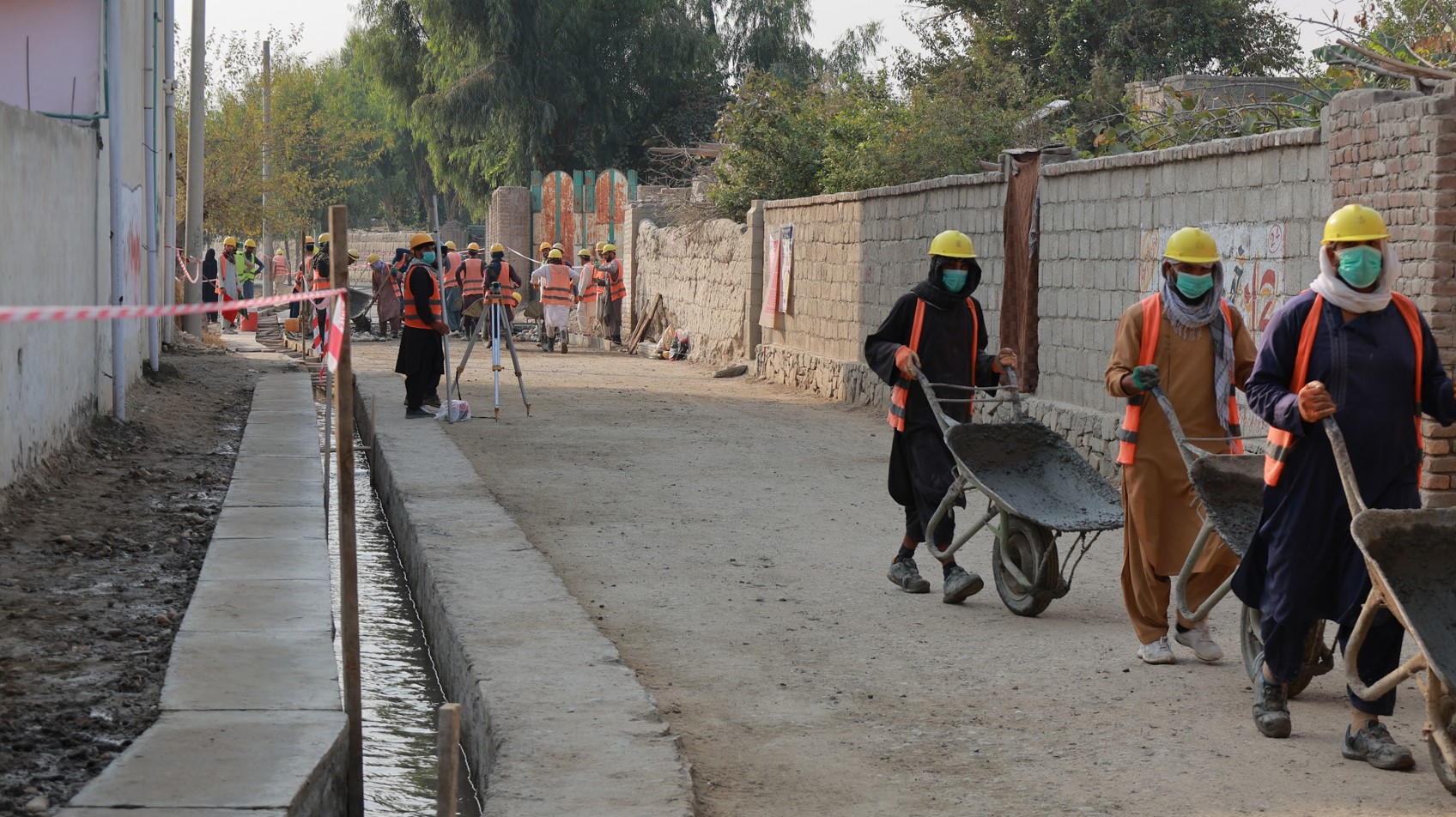
Communities prioritize subprojects based on their needs as guided by resource mapping processes through CRLP. These include rehabilitation of community roads and streets, irrigation canals, drainage systems, protection and retaining walls that support livelihoods and improve access to services. Many beneficiaries live in areas highly exposed to climate change and disaster risks, including droughts, floods, landslides, and extreme temperatures and CRLP. CRLP has provided incentives in urban areas to promote climate-resilient livelihoods and basic services, thereby strengthening communities’ ability to adapt to climate shocks while addressing the underlying drivers of vulnerability.
Partnering with Communities, NGOs, and the Private Sector
CRLP is implemented through strong partnerships with international and national NGOs delivering rural activities and local private construction contractors implementing urban labor-intensive works. To date, 208 local contractors have implemented 874 subprojects, supported by more than 1,000 small local private suppliers, strengthening local markets and skills while delivering community assets.
Looking Ahead
As Afghanistan continues to face economic, climate, and displacement challenges, CRLP remains a critical platform for delivering jobs, services, and resilience—at scale through an inclusive, principled and community-driven approach.
×
![]()