From Loss to Dignity: Wreshmina’s Story of Resilience in Kunar
From Loss to Dignity: Wreshmina’s Story of Resilience in Kunar

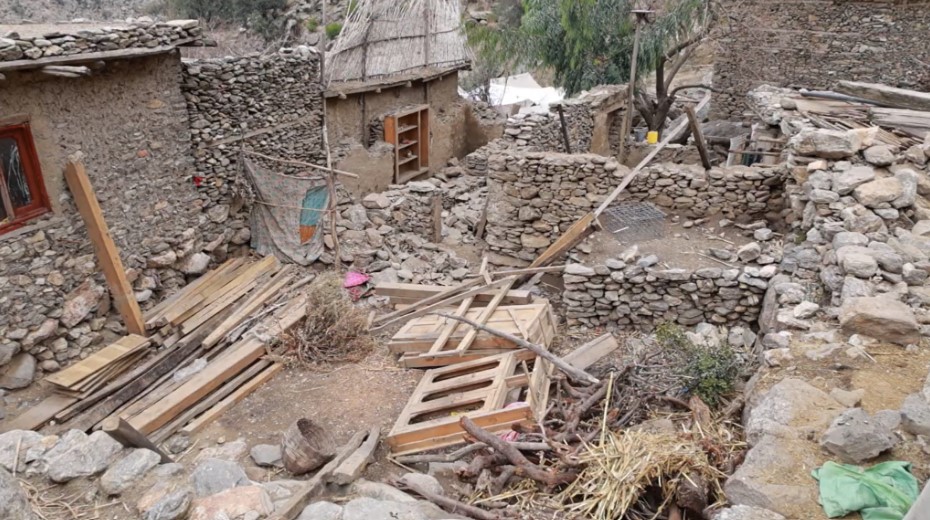
Homes destroyed in Kunar province following the earthquake, leaving families displaced and in urgent need of support. @UNOPS/Rafiullah Hemat
On the night of 31 August 2025, a devastating earthquake tore through the valleys of Kunar Province, leaving behind destroyed homes, shattered lives, and grieving communities. Among the survivors in Amrai village was Wreshmina—a widow already carrying the weight of loss, now faced with yet another unimaginable crisis.
“We had nothing,” she recalls. “No food, no medicine, and many people were injured.”
When the earthquake struck, it didn’t just destroy homes—it deepened the vulnerability of those already struggling to survive. With no stable income and limited support, widows like Wreshmina were left to care for their families in the harshest of conditions.
A Lifeline When It Was Needed Most
Through the Community Resilience and Livelihoods (CRL) Project, social grants were delivered to the most vulnerable households—including widows like Wreshmina.
Each household received AFN 10,000 in cash assistance—an amount that became a lifeline.
“With this support, we bought medicine for those injured in the earthquake and went to the doctor,” Wreshmina explains. In the face of crisis, every decision mattered. Every penny carried the weight of survival.
“With the remaining money, we bought flour and cooking oil for the children, because we had none,” she adds. “We also bought tea, sweets, clothes—because it is winter, and the weather is very cold.”

Wreshmina cooking for her family beside her tent in Kunar province. @UNOPS/Sana Stanikzai
More Than Assistance—A Sense of Dignity
For Wreshmina, the support went beyond meeting basic needs. It restored something deeper—dignity, choice, and the ability to care for others.
In communities like Amrai, where many families lost everything overnight, this assistance allowed women—especially widows—to make decisions for their households, prioritize urgent needs, and support not only their own families but also injured neighbors.
“We were able to help others too,” she says. “That gave us strength.”
A Community Rebuilding Together
Wreshmina’s story is one among thousands across Kunar, Nangarhar, Laghman, and Nuristan provinces, which were impacted by the earthquake. Through a combination of social grants, cash-for-work opportunities, and rehabilitation of critical basic services, communities began to recover—not just physically, but socially and economically.
At the heart of this response were Community Representative Groups (CRGs), which ensured that assistance reached those most in need quickly and transparently. Their role helped transform relief into a community-driven recovery effort.
CRGs played a key role in identifying the most vulnerable households and prioritizing support based on urgent needs. They also helped bridge communication between communities and implementing teams, ensuring that local voices were heard in decision-making.
In addition, CRGs contributed to building trust and accountability within the response process, strengthening community ownership of the assistance provided.

UNOPS team meeting with the Community Representative Group (CRG) members and earthquake-affected women in Kunar Province. @UNOPS/Rafiullah Hemat
Hope Amid Hardship
Today, while the scars of the earthquake remain, Wreshmina and others like her are slowly rebuilding their lives.
Her story is not only about loss—but about resilience, compassion, and the quiet strength of women who continue to carry their families forward against all odds.
“In those difficult days, this support meant everything to us,” she says.
Out of the 8,403 households reached, 775 were widows and female-headed households—highlighting the CRL Project’s commitment to supporting those most vulnerable and at risk in times of crisis.
×
![]()